


Getting Granular: The Federal Court of Appeal Puts a Fine Point on Ambiguity
AP&C Advanced Powders & Coatings Inc. v. Tekna Plasma Systems Inc., 2026 FCA 13
In a recent decision, Canada’s Federal Court of Appeal (“FCA”) affirmed a rare finding of claim ambiguity leading to patent invalidity. The decision confirms that a specification must permit the person of ordinary skill in the art (“POSITA”) to determine whether their methods or articles infringe one or more patented claims.[i]
In this case, the claims described a process for creating metallic powder that resulted in a particle that contained a “depletion layer”. However, the specification provided no reasonable method for a POSITA to determine whether potentially infringing powders and particles contained this “depletion layer” and therefore fell within the ambit of the claims.
Background
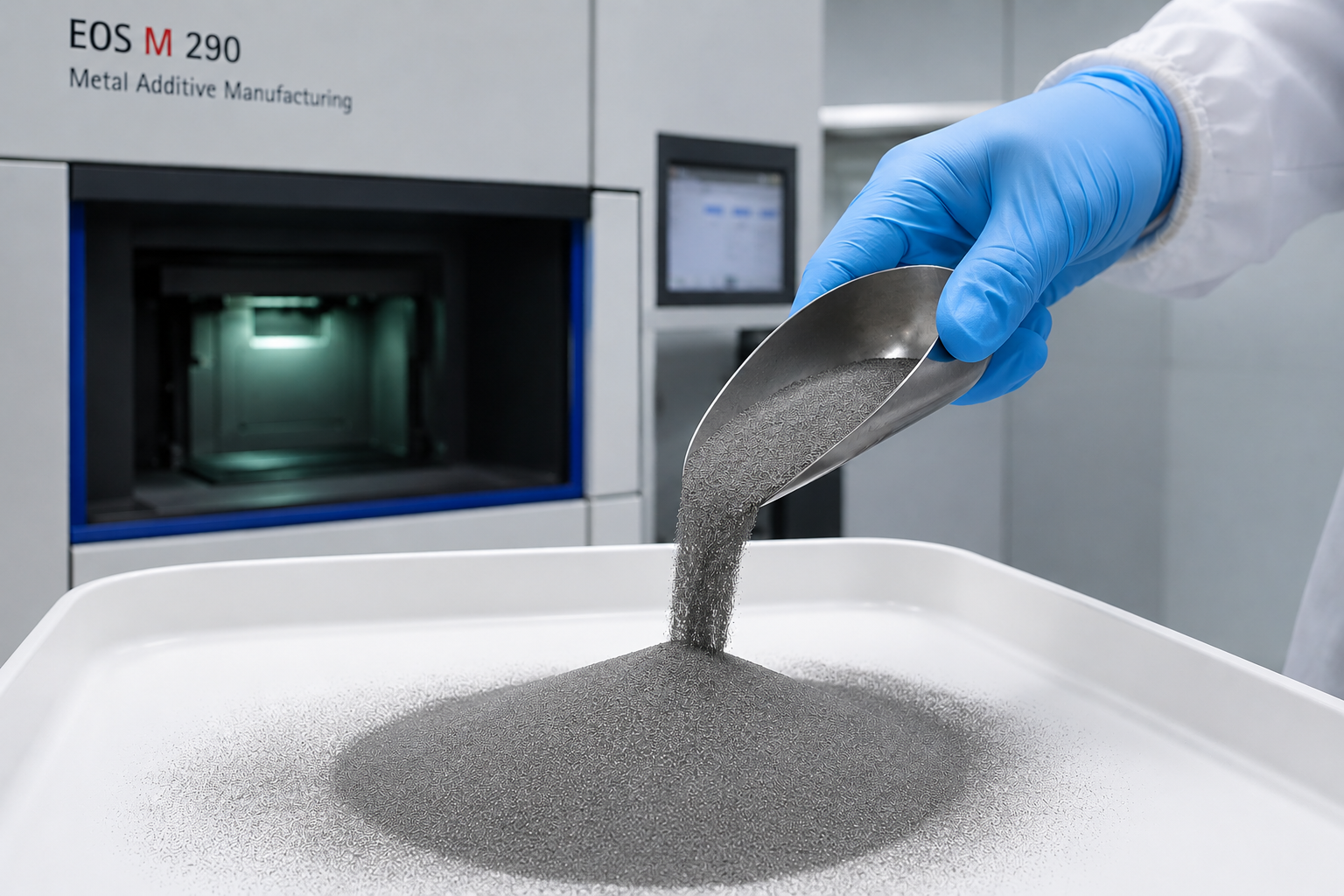
Advanced Powders & Coatings Inc. (“AP&C”) and Tekna Plasma Systems Inc. (“Tekna”) are competitors in the market for metal powders used in “additive manufacturing”, also known as 3D printing. AP&C held two Canadian patents covering metal powder atomization processes whereby certain “additive gases” were injected into the atomization process. According to AP&C and its patents, this injection of “additive gas” resulted in the creation of a layer below the surface of the metal particle, which the patent referred to as the “depletion layer”. According to AP&C, the existence of this “depletion layer” resulted in the particles holding a neutral electromagnetic charge and showing improved qualities for the purposes of additive manufacturing.
AP&C alleged that Tekna’s titanium alloy powder production infringed those patents.
Tekna denied the infringement and alleged that AP&C’s patents were invalid due to failing to adequately define what constituted a “depletion layer” and failing to describe a process whereby POSITAs could reasonably determine whether a given particle contained this essential element of the claims. This meant the claims were ambiguous.
“Depletion Layer” Was Not a Known Term
The Federal Court (“FC”) found that “depletion layer” was not a term generally used in powder manufacturing. AP&C’s counsel described it as a “term of patent,” meaning a term coined by the inventors for the patent itself.[ii]
Use of a novel or “coined” term in a patent specification is not necessarily fatal. Careful drafters will often resort to acting as their own lexicographer, defining key terms in specific ways. But when a patent uses a new term, the patent should give enough information for a skilled reader to know whether a product or process falls inside the claim.
According to the FC, AP&C’s patent did not do so.
AP&C’s Testing Argument Did Not Save the Claims
AP&C argued that a POSITA could identify the existence or non-existence of a depletion layer by comparing the oxygen concentration profile of a powder particle made with additive gas to a powder particle made without additive gas.
The Federal Court rejected that approach, stating it would require reading a testing method into the patent that the specification did not already include. This would amount to reading the “comparative method into the disclosure before then reading it into the claims”.[iii]
The infringement evidence created another practical problem: AP&C’s experts compared Tekna’s powders to AP&C’s own powder samples. But infringement is to be assessed by comparing the impugned product or process to the patent claims, not to the patent owner’s product. The Federal Court found that AP&C’s approach depended on access to AP&C samples that the public would not have.[iv]
A patent should not require competitors to access the patent owner’s confidential products or internal testing data to know whether they infringe.
After Analysis: Appellate Agreement About Ambiguity
On appeal, AP&C argued that the Federal Court’s conclusion effectively required a valid patent claim to include a way of proving infringement.[v] The FCA rejected that argument.
The FCA confirmed that the claims of a patent must define the invention “distinctly and in explicit terms” and that failure to do so may make the patent invalid for ambiguity.[vi]
The FCA affirmed the trial court’s findings that a POSITA would not be able to confirm the existence of a “depletion layer” or whether it met the essential elements set out in the claims.
Commentary
The decision is a strong reminder that the patent process is a bargain between the applicant and the public. The applicant receives a time-limited monopoly in exchange for a full description of the invention and its operation. For the bargain to function, the claims must clearly set out the boundary of what does and does not fall within the patent, and a POSITA must be able to determine whether their own competing products or processes fall within that boundary.
As the FCA observed, part of the bargain between patentee and the public is the “notice function” claims serve, which “permit[s] the skilled reader to understand what falls within the claim and what does not.”[vii] Claims that fail to provide such notice are of “uncertain scope” and a “public nuisance”.[viii]
For assistance with patent drafting, please contact Christina Lee at info@pckip.com.

Christina Lee is a shareholder and licensed patent agent at PCK. She focuses on drafting and prosecuting patent applications, with a particular emphasis on software systems, automation platforms, and data technologies. She supports clients in developing IP strategies that are scalable, efficient, and well-integrated with product development timelines.
[i] AP&C Advanced Powders & Coatings Inc. v. Tekna Plasma Systems Inc., 2026 FCA 13 at paras. 5-8 (the “FCA Decision”).
[ii] Tekna Plasma Systems Inc. v. AP&C Advanced Powders & Coatings Inc., 2024 FC 871 at para. 6 (the “FC Decision”).
[iii] FC Decision at para. 10.
[iv] FC Decision at paras. 405-406.
[v] FCA Decision at para. 2.
[vi] Ibid.
[vii] FCA Decision at para. 3.
[viii] Ibid.
PCK Intellectual Property is a leading North American intellectual property law firm based in Canada, specializing in the preparation, prosecution, registration, enforcement, and strategic management of patent and trademark portfolios for global markets. Our team of seasoned patent agents, trademark agents, engineers, scientists, and IP lawyers supports clients across diverse technologies, with expertise in trademark law, trademark registration in Canada, trademark applications, trademark prosecution, trademark opposition proceedings, trademark portfolio management, trademark protection and enforcement, brand protection strategy, coordinating cross-border IP strategies including PCT national phase filings, Madrid Protocol trademark registration, and international patent filing in Canada. Whether you are a startup seeking IP strategy guidance, an inventor exploring how to protect an idea in Canada, or a US or foreign company looking to expand IP protection to Canada, contact us today to explore how we can help secure and manage your intellectual property.
The contents of this article are provided for general information purposes only and do not constitute legal or other professional advice of any kind.